At this years SharePoint Conference North America, Microsoft surprised and, I think, largely impressed our community with the announcement of SharePoint Spaces.
This lovely little piece of technology, that has a skunkworks feel about it, could do more to democratise Virtual and Mixed Reality in the workplace than anything else so far, although it has and will have its fair share of “what’s the point?” respondents who will see it as nothing more than a gimmick.
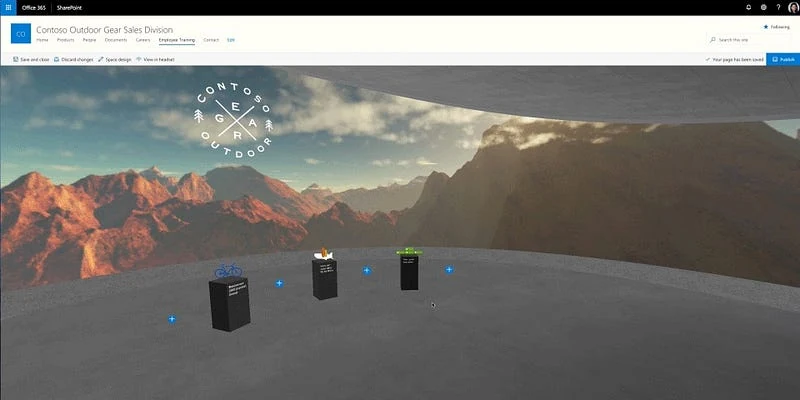
We have had, and I have been using, Virtual Reality for sometime now with a large focus on virtual productivity and meetings using tools like Facebook Spaces, AltSpaceVr, Virtual Desktop and the like, but the problem with VR/AR is getting a mass market into the experiences.
What SharePoint Spaces aims to do is put a 3D representation of your data right there in front of you. All users will be able to engage their 3D content from a 2D browser. Anyone who experienced VRML many years ago will feel a tingle of nostalgia and this that didn’t will be under or over-whelmed! And special users will be able to click that little “View in headset” button for a fully immersive experience.
What is a SharePoint Space?
It’s not immediately clear what the concept of “a SharePoint Space” is, but I am pretty sure it will end up being attached to a Office365 Group and / or Team and hopefully bring together content and meetings relating to that group of users.
Spaces is a term I already use when talking about Facebook Spaces, but I am not seeing a common application here. Facebook Spaces is more about a virtual meeting room where you can bring images and videos into the experience and SharePoint Spaces appears to be primarily about viewing content. Well, for now at least. I think the reuse of terms may lead to some confusion.
This teaser video from Microsoft gives an overview of what Spaces is.
What content will I view
The teaser video references “data, documents and files in an immersive environment from any device”.
We have been able to store 3D objects in SharePoint for a little while and 3D paint has been bundled with Windows 10 for a while. I am not convinced about navigating “documents” in a mixed reality environment. Sure, a word document scaled up to the equivalent of a cinema screen might make it easier to read, but I just don’t feel that experience. And anyone who has tried to type on a virtual keyboard in VR will know that it’s nowhere near a quick as an Actual Reality keyboard. So is the value going to be restricted to those businesses who use 3D objects? Product development companies? Manufacturing? eCommerce? I’m not sure yet but time will tell.
Now, coming on to data is a whole other ball game. HUGE SharePoint lists, SQL Server data, etc is very hard to consume in 2D and we either apply views, filters or generate reports to make that large data more manageable. And then we get to tools like Power BI for visualising big datasets.
I think a massive benefit will be the ability to walk around our PowerBI dashboard in 3 dimensions, even 4 dimensions if you bring in a date slicer! Businesses could have their own election-style swingometer experience, or walk around a world map seeing where sales are up or down and drill into the reasons for such.
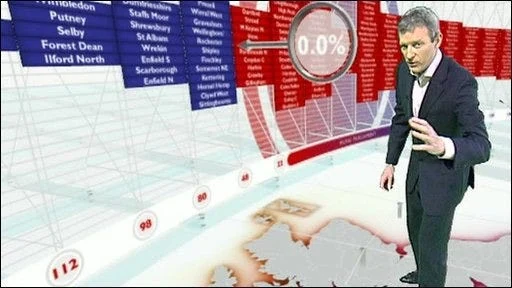
I think this experience will be really useful to analysists, rather than just a gimmick… if we can only convince them that they won’t look like a fool wearing a big headset.
The last part of Microsoft’s statement is interesting: “on any device”. I hope this means Windows Mixed Reality Devices, Oculus Rift and Go, HTC Vive, google daydream and all the other variants. I am already seeing some struggles with apps not covering all devices. Facebook Spaces is on Rift, but not Go. This is frustrating to me as our Power VR users can’t meet with our lightweight Go users.
Mixed or Virtual Reality?
I believe that MS is in the right place with Mixed Reality when it comes to the workplace. Virtual Reality is a fully immersive experience where the user is taken out of any awareness of their surrounding and into the virtual environment. Anyone who has tried it with friends knows that this leads to irritating jokes and pranks and can make the person taking the experience feel self-conscious and I don’t think this will be largely popular in the workplace. However, Mixed Reality, also known as Augmented Reality overlays the virtual world into the actual world, either via glasses or headset mounted cameras. This means that business consumers will be fully aware of their surroundings whilst taking the experience.
The closing bit
I am very excited to see what SharePoint Spaces brings to the world of VR and the workplace. I am waiting to be accepted into the preview program and as soon as I do, I will share my experiences and views with you.
You can read the fully announcement here:
SharePoint innovations transform content collaboration with mixed reality and AI - Microsoft 365…Today at the SharePoint Virtual Summit, streamed live from SharePoint Conference North America, we shared our vision and…www.microsoft.com
And register for the preview here:
Fill | Nominate your organization for the SharePoint spaces private previewSharePoint spaces is excited to work with you to learn how you would use these incredible new capabilities. We'd love to…forms.office.com